
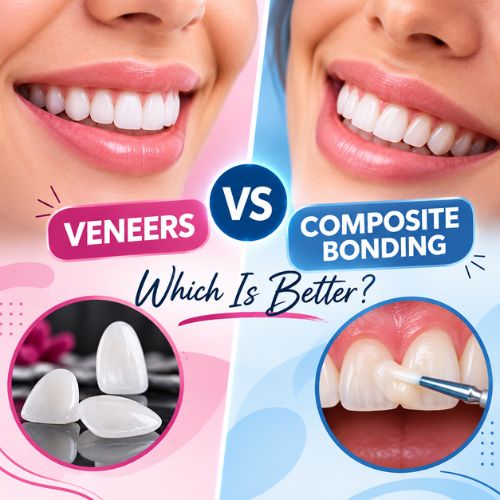
If you’re worried about the look of your teeth, in terms of shape, colour, size or even little imperfections, then both veneers and composite bonding can help. But the two therapies are not interchangeable, and the choice will depend on the desired impact and several other criteria.
What’s the difference between the composite bonding and veneers?
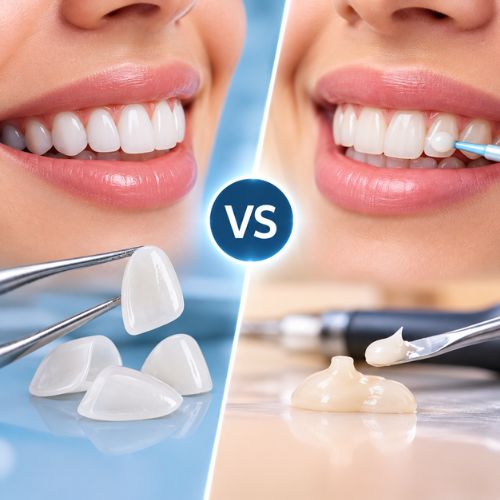
Veneers are the thin shells placed on the surfaces of the teeth. Porcelain veneers are specially created to offer a highly uniform look to several teeth. During composite bonding, your dentist applies tooth-colored resin to your teeth and forms and hardens it into place.
The big difference how the surgery is performed. Bonding is less invasive than porcelain veneers since no enamel is removed. Since the process of porcelain veneers includes remove enamel, they cannot be reversed.
Veneers Versus Composite Bonding
However, both options can appear very natural depending on how they are done. If you are looking to have a beautiful smile, then it is advisable that you go for porcelain veneers because they are made especially for each tooth. Additionally, porcelain veneers can be used to hide discoloration problems that cannot be treated by whitening procedures.
The dentist can also sculpt the bonding right onto the tooth using the composite bonding method. This technique is suitable in cases where there is the need for a minor alteration, such as where you wish to fill a chip in the tooth’s surface.
Which one will last longer?
However, veneers will definitely outlive other forms of cosmetic dentistry when it comes to longevity. The lifetime of porcelain veneers ranges from 10 to 20 years whereas dental bonding is likely to survive between 3 to 10 years.
However, the longevity of veneers also depends upon other factors including maintenance of oral hygiene and biting pressure. Visit Family Dental Care today for your treatment.
Is composite bonding the best way to the fix little problems?
Usually, yes. Composite bonding may be an option for treatment where there is a chip on the edge of the tooth, a small gap, a minor fault or a small alteration in the form of the tooth. The operation may typically be done in one dentist appointment and is considered reversible as it typically does not include any dramatic reduction of the enamel.
Veneers are a more sensible option when you want a more comprehensive change of numerous teeth, or you want a longer-lasting impact.
Conclusion
If you want the slight modifications to your smile, composite bonding is best, but if you want a substantial change to your smile, veneers can be employed. Whether you will have composite bonding or veneers is up to you, but one thing is for sure: our dentists at Family Dental Care will help you