
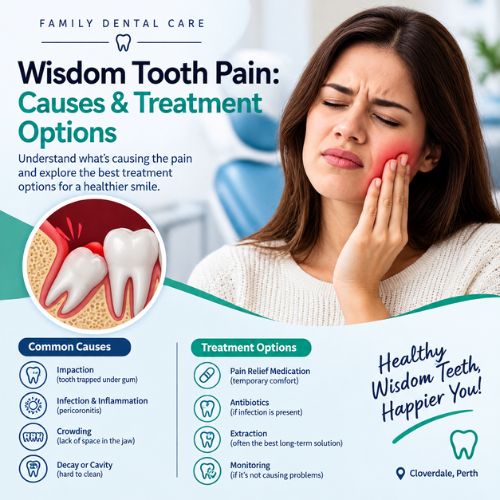

Wisdom tooth pain may occur at an unexpected moment, creating pain while doing simple things like chewing, talking, or simply opening one’s mouth. Wisdom teeth are actually the molars which emerge later on and are meant to erupt during the age of late teens and early twenties. However, their eruption can be a cause of trouble in case of lack of space for them to erupt.
What makes wisdom teeth painful?
Impaction is one of the most common causes, which means that the tooth is trapped either under the gum or growing at an odd angle. A partially emerged wisdom tooth may also form a pocket where food and bacteria tend to collect.
It can develop due to infection or inflammation of the gum tissue surrounding the partially erupted tooth. Among other things, pericoronitis can be characterized by pain, swollen or painful gums, a bad taste or odour from the mouth, and even jaw joint issues. Decayed wisdom teeth can be a problem as well as gum infections, since they are difficult to reach when brushing.
Treatment Methods Wisdom Tooth Pain
The treatment will vary according to the root cause and condition of the tooth. In case of mild symptoms, your dentist will offer pain relief methods and means of maintaining cleanliness in that area before deciding if there is any further action that should be taken. Rinsing with warm salt water and over-the-counter pain relief drugs may help in the interim until professional dental help is obtained. However, this process does not solve a diseased or impacted tooth.
If the wisdom tooth has recurring infections, serious decay, damage to the adjacent tooth, the formation of a cyst or if it is causing problems, extraction of the wisdom tooth might be recommended. Depending on the location of the tooth, it can be removed either under local anesthesia, sedation or other suitable anesthetic techniques.
However, all wisdom teeth need not be removed. A healthy tooth that has erupted normally and functions well and is able to be kept clean can be observed during regular dental check-ups.
When to Visit a Dentist
If you are experiencing continuous pain in your wisdom teeth along with other symptoms such as swelling, fever, bad taste, inability to open the mouth or worsening pain, then do not neglect it. Swelling to a severe degree, to the point where it affects breathing and swallowing, requires urgent medical attention.
Conclusion
Should your wisdom tooth pain be interfering with your everyday activities, the team at Family Dental Care will help figure out what the exact cause is and then provide the most appropriate solution for the problem. Whether monitoring, conservative therapy, or extraction is what you need will depend on your specific case; however, the professionals at Family Dental Care will help you identify the problem.